
Pirate Lore

Tales of treasure, treachery & adventure from the legendary pirates who sailed the Carolina coast.

Chart Yer Course

Select a chapter to begin

Blackbeard
Early 1700s Charleston to Outer Banks

Blackbeard

Terror of the Carolina Coast

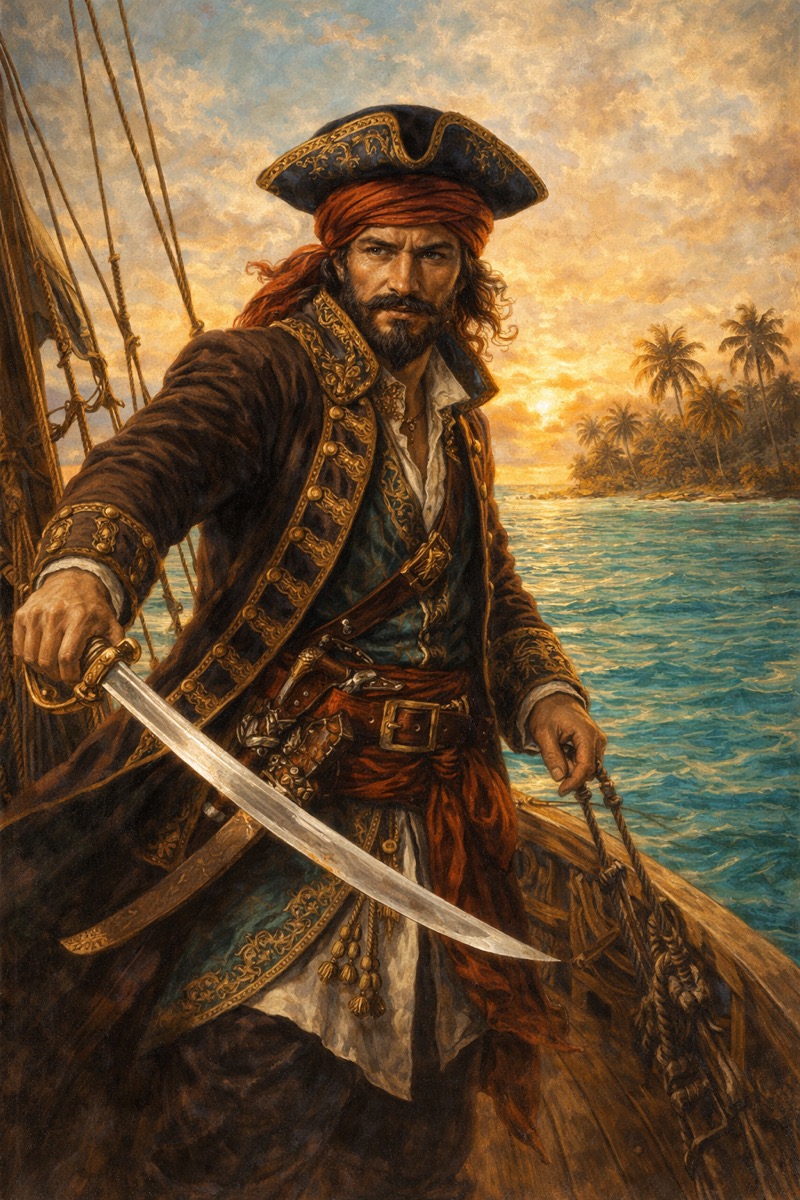
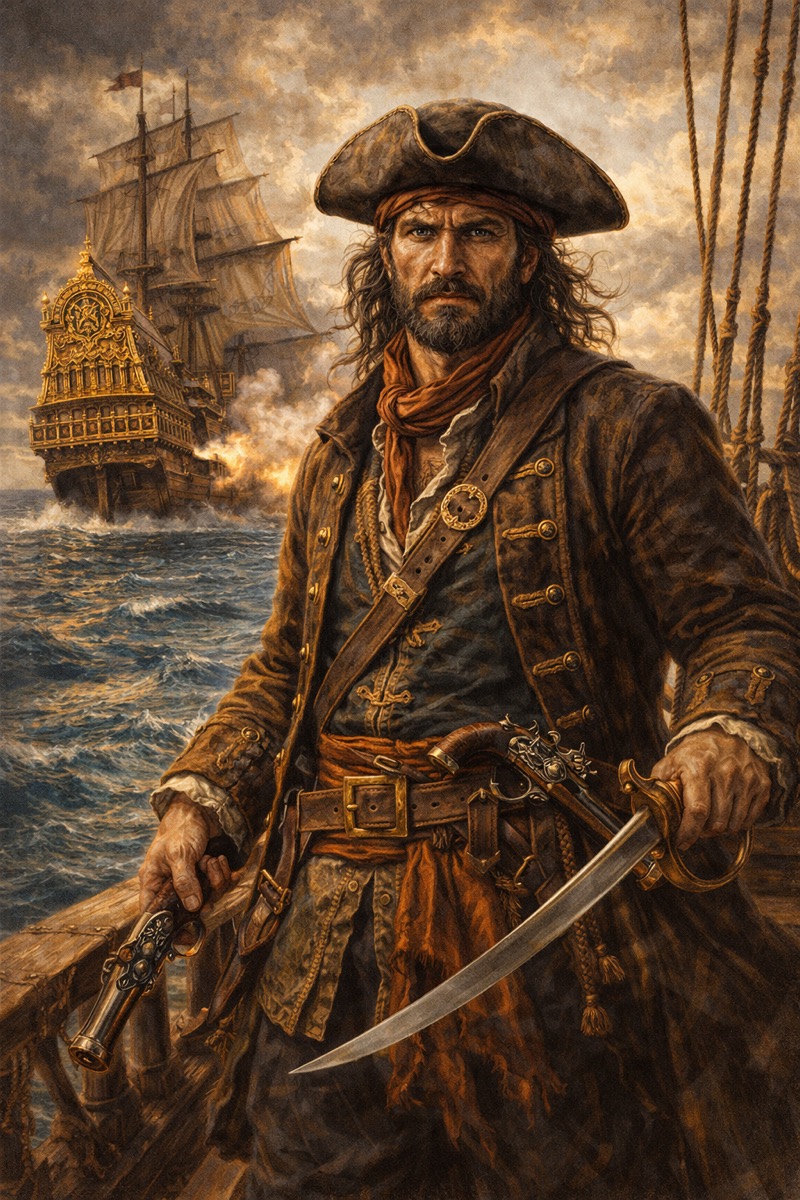
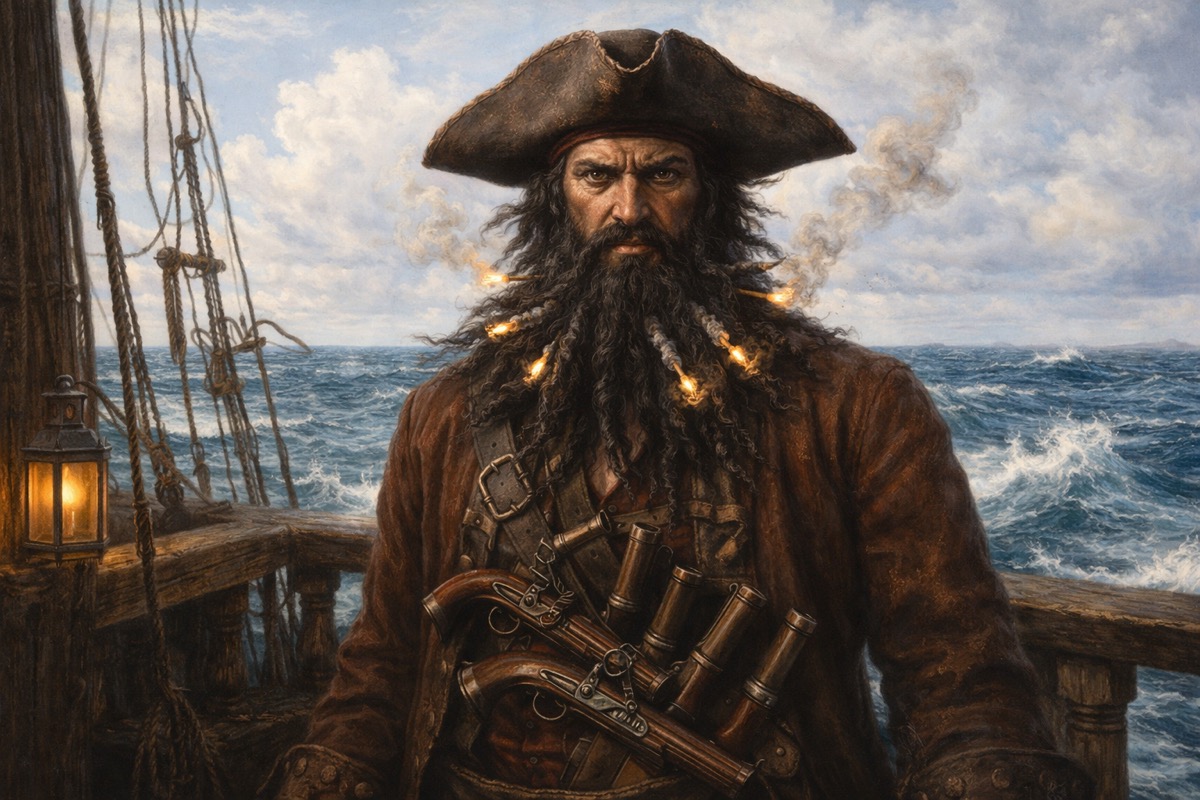
One of the most infamous pirates along the Carolina coast was Blackbeard, whose real name was either Edward Teach or Edward Thatch. He was an Englishman who trolled the Caribbean and the east coast of the present-day United States in the early 1700s.

Blackbeard famously blockaded the port of Charles Town (today known as Charleston), South Carolina, which is a 90-minute drive south of Myrtle Beach. He and his crew often pillaged and plundered ships and communities between Charles Town and Bath, North Carolina, which is at the northern end of the Outer Banks in North Carolina.

“He famously blockaded the port of Charles Town, striking fear into every soul on the Carolina coast.”
Anne Bonny
Early 1700s Charleston, SC

Anne Bonny

The Headstrong She-Pirate of Charleston

Female pirates were more rare than men, but they existed. Headstrong does not even begin to describe Anne Bonny.

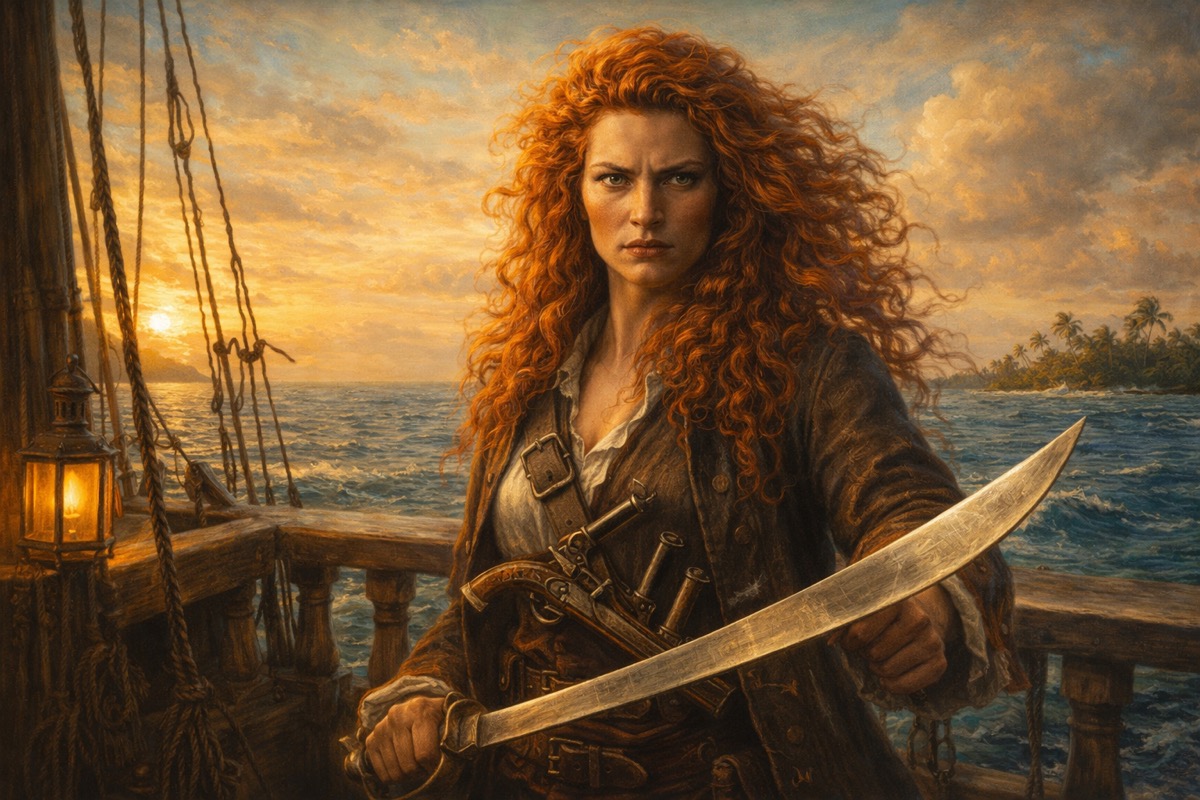
Although she was raised in Charleston society to be a “proper” young lady, Anne was a tomboy through and through. With her mop of red curly hair from her Cork Ireland ancestry flowing like a lion’s mane, she dressed and acted like a 1700s boy. There were no proper teas with crumpets and flowers for Anne – she liked riding, hunting and shooting.

“With her mop of red curly hair flowing like a lion’s mane, she dressed and acted like a 1700s boy.”

In an attempt to rein her in, Anne Bonny’s father arranged a marriage for her to a respectable Charleston man. Anne was not interested in being conventional, so she eloped with a young sailor named James Bonny. James did not turn out to be as exciting as Anne wanted, and when her husband denied her a divorce, Anne fled with her new paramour, a pirate named Calico Jack Rackam.

On Calico Jack’s ship, Anne disguised herself as a male because in the early 1700s women were not allowed on pirate vessels. They kept their secret for several months until Calico Jack and his crew captured a Dutch ship. Anne was often observed deep in conversation with one of the captured crew members, and Calico Jack accused her of infidelity. That’s when Anne revealed that the “man” she was talking to was actually another woman named Mary Read.

After that, the two women abandoned their disguises and were open about being female pirates. By all accounts they both enjoyed their days of battle, capturing and pillaging. Those days were numbered however, because Calico Jack Rackham’s ship was captured by the British military in Jamaica, in a crackdown on pirates.

Both Anne and Mary were pregnant at the time, and the women were sent home. Anne returned to Charleston, where she faded from history.

Captain Kidd
1645 – 1701 Scotland to New York

Captain Kidd

A Cautionary Tale of Restless Ambition

Many have heard the name Captain Kidd, and the sound of it invokes a life full of plundering and pillaging. And it was, until it wasn’t. His true story smacks of allegory – like an Aesop’s fable lesson about learning when to say when.

Born in Scotland around 1645, young William Kidd became a seaman as soon as a ship would take him. For a while, his career trajectory shot off like a cannon! He started as a workaday sailor, and quickly progressed to being a successful privateer for King William. After that post ended, Captain Kidd was a merchant seaman who lived a life of privilege in New York City. He married and had two daughters, and the family went to church and were considered respectable.

“His story smacks of allegory – like an Aesop’s fable lesson about learning when to say when.”

Unfortunately for him, Captain Kidd was too restless to enjoy a comfortable and distinguished life. He craved adventure, and when he heard about a plan for the British crown to hire someone to capture and loot pirate ships, he was all in. However, there was a catch: Several prominent men would bankroll Captain Kidd’s privateering in exchange for part of the plunder, but if Kidd failed to capture enough loot to pay expenses, he would be obligated to pay the men back.

He failed. Misfortune and bad decisions not only left him owing a lot of money to important men, but ultimately he was found guilty of piracy and murder. After two years in prison, Captain William Kidd was hung beside the Thames River. His midlife crisis, his thirst for adventure, led to his death.

Local Legend

Murrells Inlet

A Pirate’s Hidden Harbour

Just south of Myrtle Beach is Murrells Inlet, which was a pleasant place for pirates to relax. They could rest easily because Murrells Inlet provided plenty of spots where a pirate ship could sail in and hide within Spanish moss hanging from live oaks along the creeks.

A local legend says that after a rum-soaked pirate party lasting all night, one of the pirates was accidentally left behind on a small island in Murrells Inlet where a stash of booze was buried. Two years later his crew returned to find the remains of the rum casks, along with the bones of the forgotten pirate.

“It is said that he died with a smile on his face.”

Types of Pirates

Four types of sea-going plunderers, and the roles often overlapped during a single career.

Pirate

Pirate

A maritime thief who attacks and robs other ships without legal permission, purely for profit.

Privateer

Privateer

A pirate who had written permission from a government to attack and steal from enemy ships during wartime.

Corsair

Corsair

Similar to a privateer, but permission could be granted outside wartime. Corsairs were largely in the Caribbean region.

Buccaneer

Buccaneer

Also similar to a privateer, mainly targeting Spanish ships sailing from Spain to the Caribbean.

Which Pirate Are Ye?

Three questions. One destiny.

A merchant ship approaches. What do ye do?

The King offers you a letter of marque. Your response?

Where would ye make port?